ZUBIQO.
AI & MLCryptoFinanceBig TechAI Models
CybersecurityGamingEVs & Clean EnergyRoboticsAerospaceBiotech & Health
Enterprise
ZUBIQO.

High-magnitude intelligence briefs for the tech and finance sectors. Zero fluff. Maximum signal.

contact@zubiqo.com
X (Twitter)ThreadsTelegramBlueskyMastodon

Sections

  • AI & ML
  • Crypto
  • Finance
  • Big Tech
  • Cybersecurity
  • Gaming
  • EVs & Clean Energy
  • Robotics
  • Aerospace
  • Biotech & Health

Publication

  • About Us
  • Editorial Ethics
  • Partner With Us
  • Contact Us

Tools

  • AI Models Pricing

Legal

  • Privacy Policy
  • Terms of Service
  • Fair Use & DMCA

Disclaimer:Zubiqo Intelligence operates as a technology-enabled news and research publication under human editorial oversight. The news briefs, market analysis, "Magnitude Scores", and "Community Sentiment" metrics provided on this platform are strictly for informational and educational purposes only. They do not constitute financial, legal, investment, or trading advice. Cryptocurrencies and financial markets are highly volatile; always conduct your own research and consult with a licensed professional before making any investment decisions. By using this site, you agree to our Terms of Service.

© 2026 Zubiqo Intelligence. All rights reserved.

Aerospace/SpaceMAG 5Bullish
•
2026-08-20•1 min read

Astronomers Discover Fastest Star Orbiting Milky Way's Black Hole at 15,500 Miles Per Second

Zubiqo Take
QuoteThreads

"We finally found a star moving fast enough to test relativity directly, saving astrophysicists from decades of mathematical guessing games."

Astronomers Discover Fastest Star Orbiting Milky Way's Black Hole at 15,500 Miles Per Second
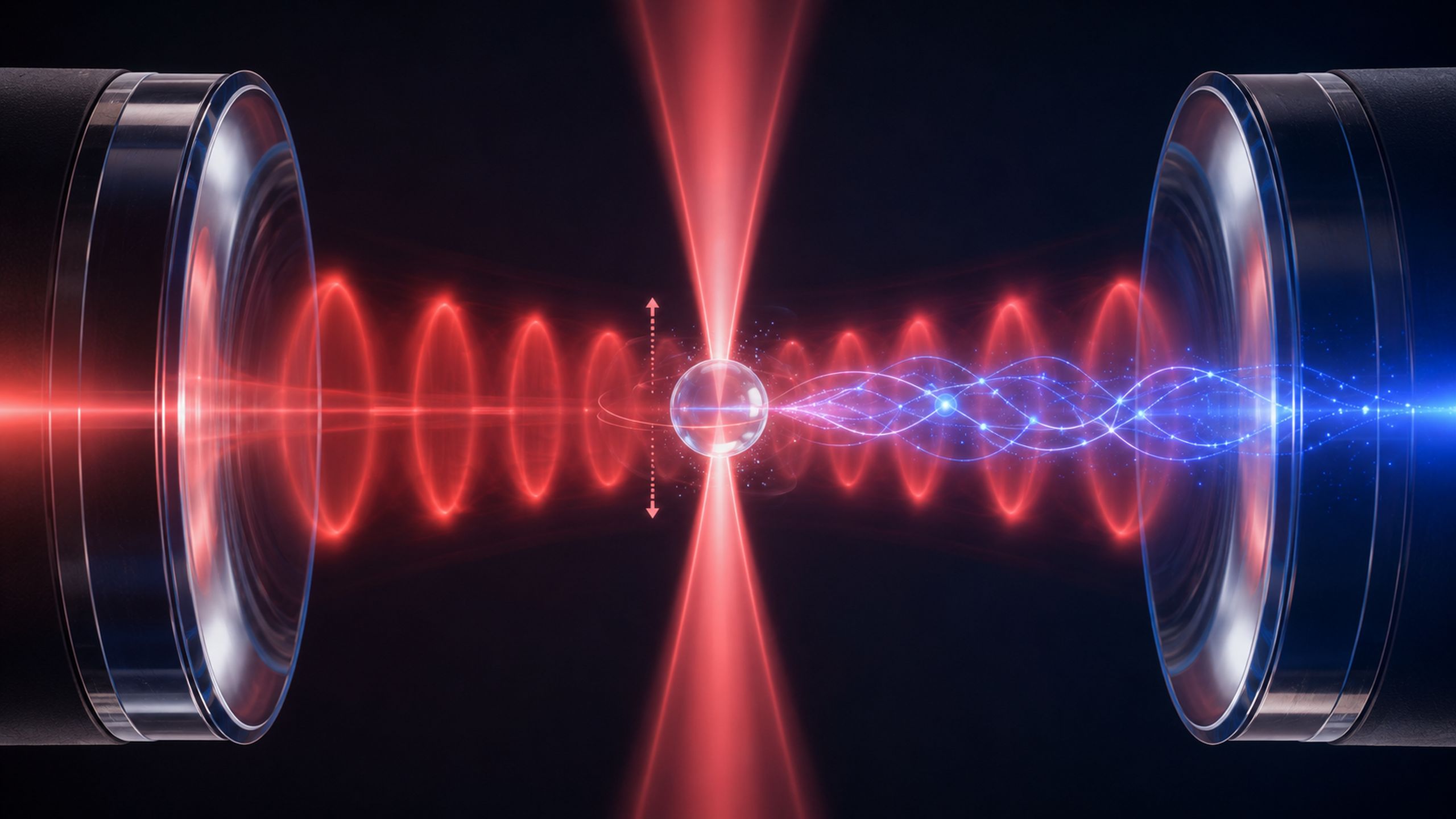
📷 Image Source: ScienceAlert

Executive Summary

  • •Astronomers identified S301, a star orbiting the Milky Way's central black hole at unprecedented speeds.
  • •S301 reaches a peak velocity of over 25,000 kilometers per second, or 8.5 percent the speed of light.
  • •The star's 2031 close approach will allow scientists to directly measure the black hole's spin and test the no-hair theorem.

Community Sentiment

1-Tap Vote

Key Developments & Data

Astronomers detect a star orbiting Sagittarius A* at 15,500 miles per second. The star, S301, completes its orbit around the 4.3 million solar mass black hole in 8.7 years. It hits a peak velocity of over 25,000 kilometers per second, meaning it's traveling at 8.5 percent the speed of light. The extreme trajectory brings S301 close enough to measure the spacetime curvature the black hole is surrounded by. S301 reaches pericenter again in 2031, giving researchers a near-term window to test the no-hair theorem. "The Galactic Center is like a remote laboratory, and the stars are the measuring probes." — Felix Mang Having a predictable orbital probe swinging this close means we can finally measure the black hole's spin directly instead of relying on the scattered data we've historically settled for.
Zubiqo Intelligence Briefing

Get the unfiltered signal before markets open.

Top tech breakthroughs, venture funding, and market moves—synthesized into a 2-minute morning read. Zero PR fluff.

✓ 100% Free•✓ 1-click unsubscribe•✓ No spam ever

Zubiqo Strategic Assessment

Primary Impact

Astrophysics research institutions and gravitational physics modeling, providing concrete observational data for general relativity.

Strategic Shift

Transitioning black hole spin and the no-hair theorem from theoretical mathematical models to directly observable phenomena.

The Ripple Effect

The 2031 pericenter approach will likely trigger a surge in funding and observational time allocation for the upcoming MICADO instrument on the Extremely Large Telescope.

This intelligence assessment is generated by Zubiqo's AI for informational purposes only.

Intelligence Quality Rating

Grade this brief: Slide & release to submit rating, or tap a preset.

🔥High Impact75%
Slide & release to voteImmune to accidental scroll
#space#astronomy#blackhole#physics
Read original on ScienceAlert
Zubiqo MethodologyVerified Signal

Synthesized across 1,500+ daily market sources with human editorial oversight under Zubiqo's standards.

Event Magnitude5 / 10
Share

Read Next

Room Temperature Quantum Entanglement Achieved With Levitating Glass Nanosphere
Hardware

Room Temperature Quantum Entanglement Achieved With Levitating Glass Nanosphere

Google Launches First AI Data Center to Space on SpaceX Falcon 9
Aerospace/Space

Google Launches First AI Data Center to Space on SpaceX Falcon 9

Stay on the wire

Breaking tech, AI, and market intelligence the moment it happens. Zero fluff.

Live Broadcasts
TelegramXThreadsBlueskyMastodon
SpaceX Starship Reaches Orbit for the First Time and Deploys Advanced Starlink Satellites
Aerospace/Space

SpaceX Starship Reaches Orbit for the First Time and Deploys Advanced Starlink Satellites

Hubble Network Hits $1.6B Valuation to Build Bluetooth Satellite Constellation
Aerospace/Space

Hubble Network Hits $1.6B Valuation to Build Bluetooth Satellite Constellation

Zubiqo Methodology

Verified Signal

Synthesized across 1,500+ daily market sources with human editorial oversight under Zubiqo's standards.

Event Magnitude5 / 10

Related Briefs

Hardware

Room Temperature Quantum Entanglement Achieved With Levitating Glass Nanosphere

Oct 1
Aerospace/Space

Google Launches First AI Data Center to Space on SpaceX Falcon 9

Oct 1
Aerospace/Space

SpaceX Starship Reaches Orbit for the First Time and Deploys Advanced Starlink Satellites

Sep 29
Aerospace/Space

Hubble Network Hits $1.6B Valuation to Build Bluetooth Satellite Constellation

Sep 24
Aerospace/Space

NASA Discovers 'Once-In-A-Century' Moon Crater From 2024 Asteroid Strike

Sep 17
Aerospace/Space

EnduroSat Secures $205M to Scale US and European Satellite Production

Sep 17