“Barring regulators from using AML as a pretext for reputation risk removes one excuse, but as long as banks face $750M BSA fines for monitoring failures, smaller crypto firms can still be rejected on strict compliance cost grounds.”
📷 Image Source: CryptoSlate
Executive Summary
•The OCC released Oct. 14 debanking findings reviewing historical policies across the nine largest US national banks from 2020 through September 2025, finding many restricted digital-asset issuers, exchanges, and administrators.
•The agency's broader sector inquiry reviewed nearly 100,000 complaints and about 50,000 documents totaling about 420,000 pages, following a separate $750M BSA penalty assessed against Bank of America on Oct. 13.
•While new OCC and FDIC rules bar using AML as a pretext for reputation-risk supervision and factor debanking into licensing reviews, banks still retain authority to decline smaller crypto firms based on individual risk assessments.
Affiliate disclosure: We may earn a commission if you open an account through this link.
Key Developments & Data
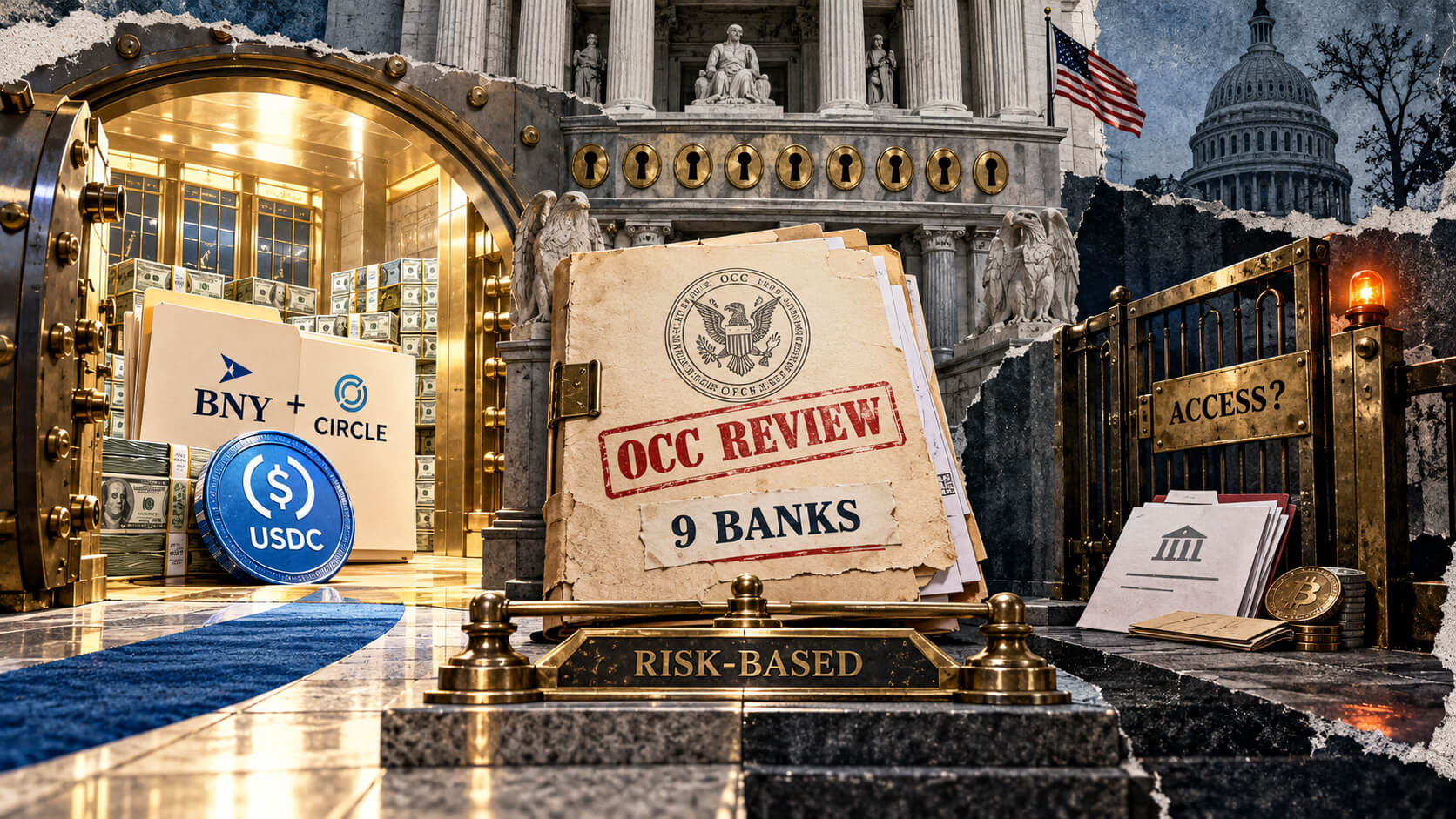
The Office of the Comptroller of the Currency (OCC) released debanking findings on Oct. 14 after reviewing policies from 2020 through September 2025 across the nine largest national banks it supervises: JPMorgan Chase Bank, Bank of America, Citibank, Wells Fargo Bank, US Bank, Capital One, PNC Bank, TD Bank, and BMO Bank.
As part of a broader customer-sector inquiry, the agency reviewed nearly 100,000 complaints and received about 50,000 documents totaling about 420,000 pages, finding that many institutions restricted banking for digital-asset issuers, exchanges, or administrators through categorical prohibitions or added approval hurdles, often citing financial crime considerations.
Comptroller Jonathan Gould said on Oct. 14 that banks should evaluate customers using objective, risk-based criteria, an approach that challenges improper exclusion while preserving a bank's ability to decline individual customers on financial, operational, or compliance grounds.
A final reputation-risk rule issued by the OCC and FDIC on April 7, which took effect June 9, bars supervisors from using anti-money laundering concerns as a pretext for public-perception supervision, though Bank Secrecy Act (BSA) and OFAC sanctions enforcement remain active—highlighted by a separate $750M OCC civil money penalty assessed against Bank of America on Oct. 13 for transaction-monitoring and reporting deficiencies.
While BNY announced institutional stablecoin custody and Circle USDC minting and redemption services on June 29, 2026, eligibility and actual access to core banking functions for smaller crypto firms remain unresolved case-level questions as the OCC weighs debanking records in licensing reviews and Community Reinvestment Act ratings.
Zubiqo Strategic Assessment
Primary Impact
US national banks—specifically JPMorgan Chase, Bank of America, Citibank, Wells Fargo, US Bank, Capital One, PNC, TD Bank, and BMO—alongside smaller digital-asset issuers, crypto exchanges, and stablecoin administrators seeking basic deposit and settlement access.
Strategic Shift
US banking supervision is shifting away from broad reputation-risk exclusion toward documented, case-by-case financial and operational risk evaluations, while retaining strict Bank Secrecy Act and OFAC compliance enforcement.
The Ripple Effect
Because banks retain authority to reject individual customers on objective compliance grounds—and face heavy penalties like Bank of America's $750M BSA fine for monitoring failures—smaller crypto firms may still face high onboarding hurdles if banks deem their AML controls too costly to manage.

:quality(82)/3d05a1b6b59f476a893b39cb9ddde28b)

