Executive Summary
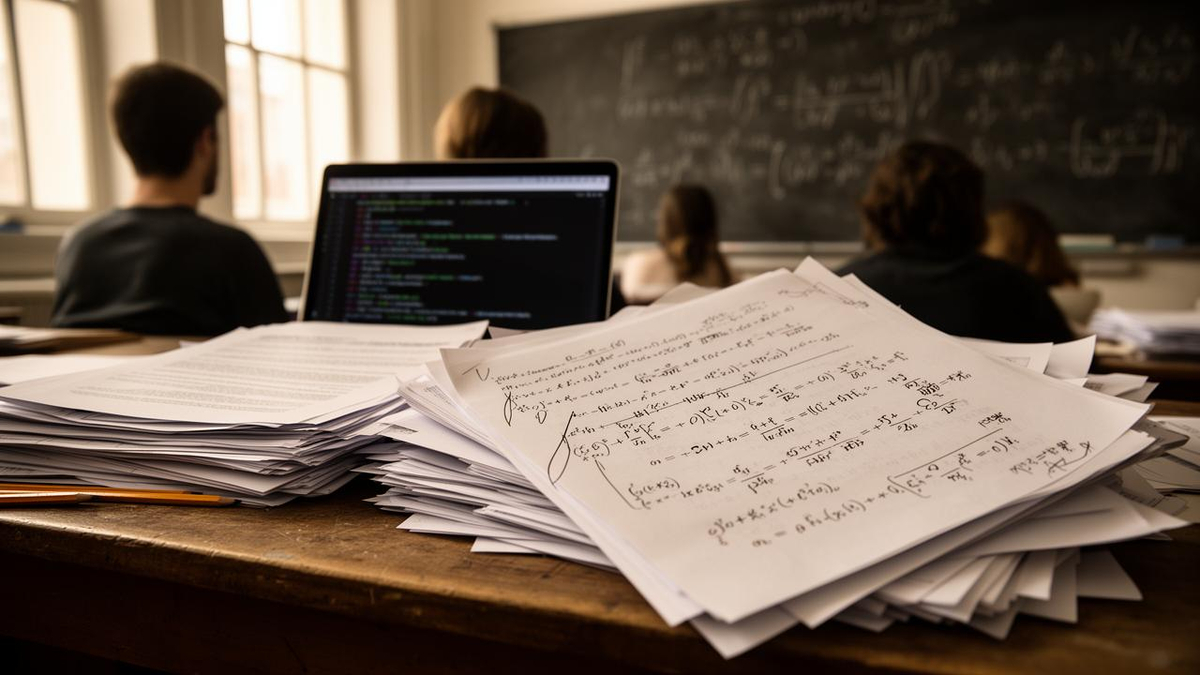
- •OpenAI published 722 AI-generated mathematical manuscripts containing solutions to hundreds of open problems.
- •The average generated result consumed compute equivalent to roughly 3 hours of ChatGPT Pro thinking time.
- •The sheer volume of manuscripts shifts a massive verification burden onto the traditional academic peer-review system.
Community Sentiment
Key Developments & Data
Zubiqo Strategic Assessment
Primary Impact
Academic mathematics and traditional peer review ecosystems face a massive influx of machine-generated proofs, creating an unprecedented verification bottleneck for human researchers.
Strategic Shift
AI labs are transitioning from purely empirical benchmarks to generating novel theoretical discoveries, treating pure mathematics as the ultimate proving ground for agentic reasoning.
The Ripple Effect
The sheer volume of AI-generated manuscripts will likely force academic journals to mandate formal computational verification as a strict baseline requirement for submission within the next 12 months.
This intelligence assessment is generated by Zubiqo's AI for informational purposes only.
Intelligence Quality Rating
Grade this brief: Slide & release to submit rating, or tap a preset.
The daily signal, delivered every weekday.
A concise weekday briefing on AI, technology and business. Zero PR fluff.
Subscription completes on Substack • Free • 1-click unsubscribe anytime