ZUBIQO.
AI & MLCryptoFinanceBig TechAI Models
CybersecurityGamingEVs & Clean EnergyRoboticsAerospaceBiotech & HealthConsumer Hardware
Enterprise
ZUBIQO.

High-magnitude intelligence briefs for the tech and finance sectors. Zero fluff. Maximum signal.

contact@zubiqo.com
X (Twitter)ThreadsTelegramBlueskyMastodon

Sections

  • AI & ML
  • Crypto
  • Finance
  • Big Tech
  • Cybersecurity
  • Gaming
  • EVs & Clean Energy
  • Robotics
  • Aerospace
  • Biotech & Health

Publication

  • Evening Newsletter
  • About Us
  • Editorial Ethics
  • Partner With Us
  • Contact Us

Tools

  • AI Models Pricing

Legal

  • Privacy Policy
  • Terms of Service
  • Fair Use & DMCA

Disclaimer:Zubiqo Intelligence operates as an automated technology and market intelligence publication providing AI-assisted synthesis with source attribution. The news briefs, market analysis, “Magnitude Scores”, and “Community Sentiment” metrics provided on this platform are strictly for informational and educational purposes only. They do not constitute financial, legal, investment, or trading advice. Cryptocurrencies and financial markets are highly volatile; always conduct your own research and consult with a licensed professional before making any investment decisions. By using this site, you agree to our Terms of Service.

© 2026 Zubiqo Intelligence. All rights reserved.

  1. Home
  2. /
  3. Hardware
  4. /
  5. World's First Nuclear Clocks Boot Up in Vienna and Beijing Labs
HardwareMAG 7Bullish
•
2026-10-07•2 min read

World's First Nuclear Clocks Boot Up in Vienna and Beijing Labs

Zubiqo Take
QuoteThreads

“Physics breakthroughs are great, but until they figure out how to hybridize Vienna's crystals with Beijing's lasers, these prototypes are just expensive lab trophies that still lose to legacy 1950s atomic clocks.”

World's First Nuclear Clocks Boot Up in Vienna and Beijing Labs
📷 Image Source: Reuters

Executive Summary

  • •Independent research teams in Vienna and Beijing have built and operated the world's first nuclear clocks.
  • •The prototypes rely on a thorium-229 isotope trapped in calcium fluoride crystals rather than the electron shells used in standard atomic clocks.
  • •Both labs are now looking to merge their respective crystal and laser breakthroughs to eventually surpass the precision of conventional timekeeping infrastructure.

Community Sentiment

1-Tap Vote

Key Developments & Data

Independent research teams in Vienna (TU Wien) and Beijing (Tsinghua University) have activated the world's first operational nuclear clocks, publishing their breakthrough prototypes in Nature. The devices measure time by tracking high-powered laser interactions with the nucleus of a thorium-229 isotope trapped in solid-state calcium fluoride crystals. While operational, researchers admit the prototypes remain "far from target performance" and do not yet outperform the legacy atomic clocks built in the 1950s. Future iterations will attempt to merge the higher-concentration thorium crystals developed in Vienna with the stronger laser technology built in Beijing. "The creation of a nuclear clock was something that physicists dreamt of for almost 50 years. In my team, we have been working towards this goal since 2008." — Thorsten Schumm

Zubiqo Strategic Assessment

Primary Impact

Global metrology standards, satellite-based navigation infrastructure (GPS/GNSS), and foundational physics research labs.

Strategic Shift

A fundamental shift from electron-shell transition measurement to nuclear-level state tracking for ultra-precise timekeeping.

The Ripple Effect

If future iterations merge the independent crystal and laser advancements, the resulting hardware could shrink legacy atomic clock footprints while drastically reducing network drift in high-frequency trading and secure space communications.

This intelligence assessment is generated by Zubiqo's AI for informational purposes only.

Intelligence Quality Rating

Grade this brief: Slide & release to submit rating, or tap a preset.

🔥High Impact75%
Slide & release to voteImmune to accidental scroll
Zubiqo Briefing

The daily signal, delivered every weekday.

A concise weekday briefing on AI, technology and business. Zero PR fluff.

Subscribe directly on Substack↗

Subscription completes on Substack • Free • 1-click unsubscribe anytime

✓ Free on Substack•✓ Official Substack enrollment•✓ 1-click unsubscribe
#physics#atomic-clock#thorium#metrology#research
Read original on Reuters
Zubiqo MethodologyAI Synthesis

Synthesized from linked market reporting using AI extraction under Zubiqo's editorial standards. Have a correction? Contact our desk.

Event Magnitude7 / 10
Share

Read Next

Henri Kagan and Kenso Soai Win 2026 Nobel Prize in Chemistry for Mirror-Image Molecule Breakthrough
Biotech/Health

Henri Kagan and Kenso Soai Win 2026 Nobel Prize in Chemistry for Mirror-Image Molecule Breakthrough

Francis Halzen Wins 2026 Nobel Prize in Physics for Antarctic Neutrino Discovery
Aerospace/Space

Francis Halzen Wins 2026 Nobel Prize in Physics for Antarctic Neutrino Discovery

Stay on the wire

Breaking tech, AI, and market intelligence the moment it happens. Zero fluff.

Live Broadcasts
TelegramXThreadsBlueskyMastodon
Optogenetics Pioneers Win 2026 Nobel Prize in Medicine for Brain Research
Biotech/Health

Optogenetics Pioneers Win 2026 Nobel Prize in Medicine for Brain Research

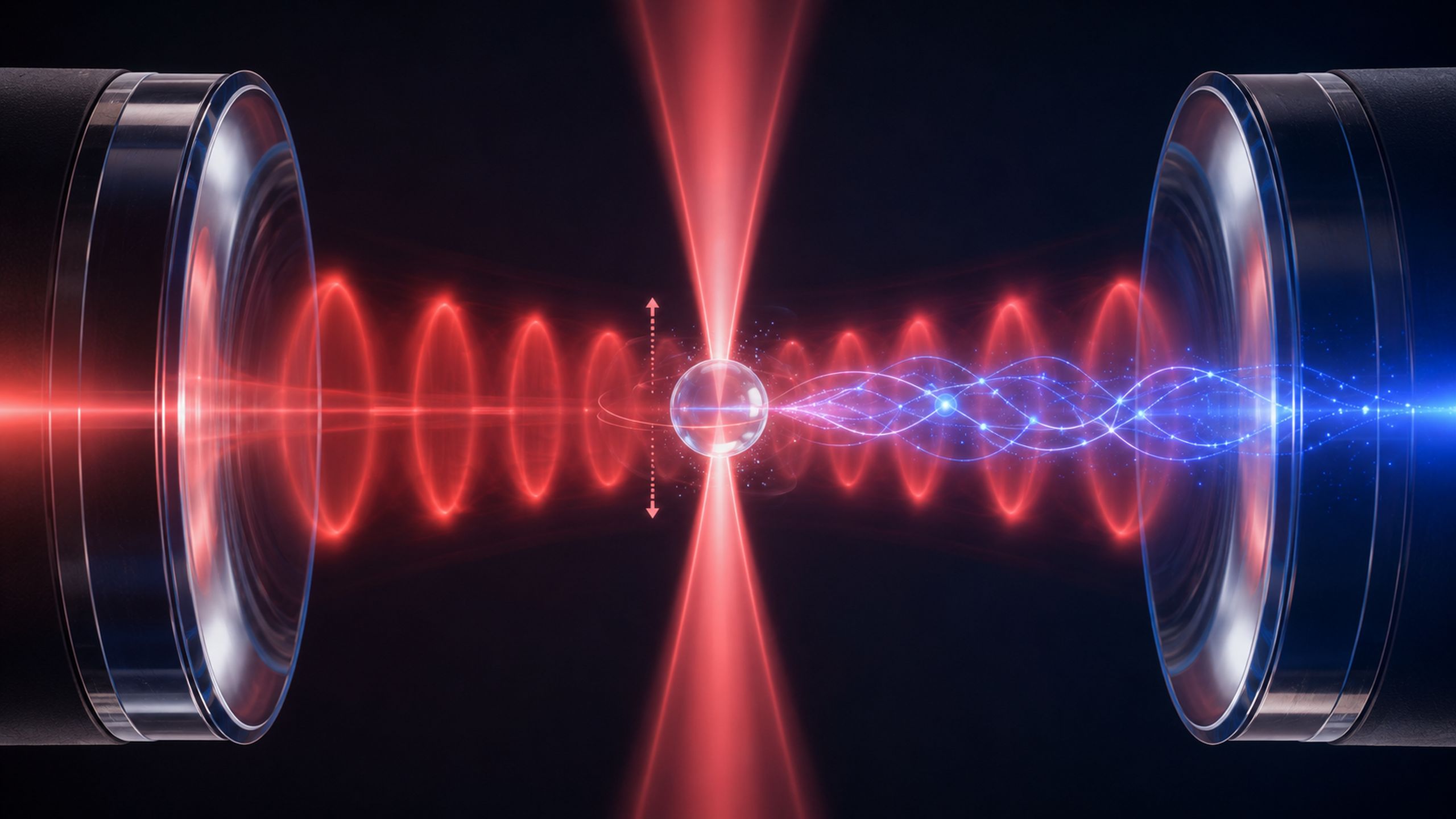
Room Temperature Quantum Entanglement Achieved With Levitating Glass Nanosphere
Hardware

Room Temperature Quantum Entanglement Achieved With Levitating Glass Nanosphere

Zubiqo Methodology

AI Synthesis

Synthesized from linked market reporting using AI extraction under Zubiqo's editorial standards. Have a correction? Contact our desk.

Event Magnitude7 / 10

Related Briefs

Biotech/Health

Henri Kagan and Kenso Soai Win 2026 Nobel Prize in Chemistry for Mirror-Image Molecule Breakthrough

Oct 7
Aerospace/Space

Francis Halzen Wins 2026 Nobel Prize in Physics for Antarctic Neutrino Discovery

Oct 6
Biotech/Health

Optogenetics Pioneers Win 2026 Nobel Prize in Medicine for Brain Research

Oct 5
Hardware

Room Temperature Quantum Entanglement Achieved With Levitating Glass Nanosphere

Oct 1
AI

Academic AI Crushes Stratego World Champion For Under $8,000

Oct 1
AI

Exa Launches Agent Ultra API for 3-Hour Exhaustive Deep Research

Sep 26