ZUBIQO.
AI & MLCryptoFinanceBig TechAI Models
CybersecurityGamingEVs & Clean EnergyRoboticsAerospaceBiotech & HealthConsumer Hardware
Enterprise
ZUBIQO.

High-magnitude intelligence briefs for the tech and finance sectors. Zero fluff. Maximum signal.

contact@zubiqo.com
X (Twitter)ThreadsTelegramBlueskyMastodon

Sections

  • AI & ML
  • Crypto
  • Finance
  • Big Tech
  • Cybersecurity
  • Gaming
  • EVs & Clean Energy
  • Robotics
  • Aerospace
  • Biotech & Health

Publication

  • Evening Newsletter
  • About Us
  • Editorial Ethics
  • Partner With Us
  • Contact Us

Tools

  • AI Models Pricing

Legal

  • Privacy Policy
  • Terms of Service
  • Fair Use & DMCA

Disclaimer:Zubiqo Intelligence operates as an automated technology and market intelligence publication providing AI-assisted synthesis with source attribution. The news briefs, market analysis, “Magnitude Scores”, and “Community Sentiment” metrics provided on this platform are strictly for informational and educational purposes only. They do not constitute financial, legal, investment, or trading advice. Cryptocurrencies and financial markets are highly volatile; always conduct your own research and consult with a licensed professional before making any investment decisions. By using this site, you agree to our Terms of Service.

© 2026 Zubiqo Intelligence. All rights reserved.

  1. Home
  2. /
  3. Cybersecurity
  4. /
  5. RPKI Protects 70.3% of Internet Routes After China Surge, Yet 18M Prefixes Remain Exposed
CybersecurityMAG 6
•
2026-10-16•2 min read

RPKI Protects 70.3% of Internet Routes After China Surge, Yet 18M Prefixes Remain Exposed

Zubiqo Take
QuoteThreads

“Deploying cryptographic route validation across 70.3% of the internet is real operational progress, right up until operators leave maxLength windows wide open so forged-origin hijacks pass RPKI checks anyway.”

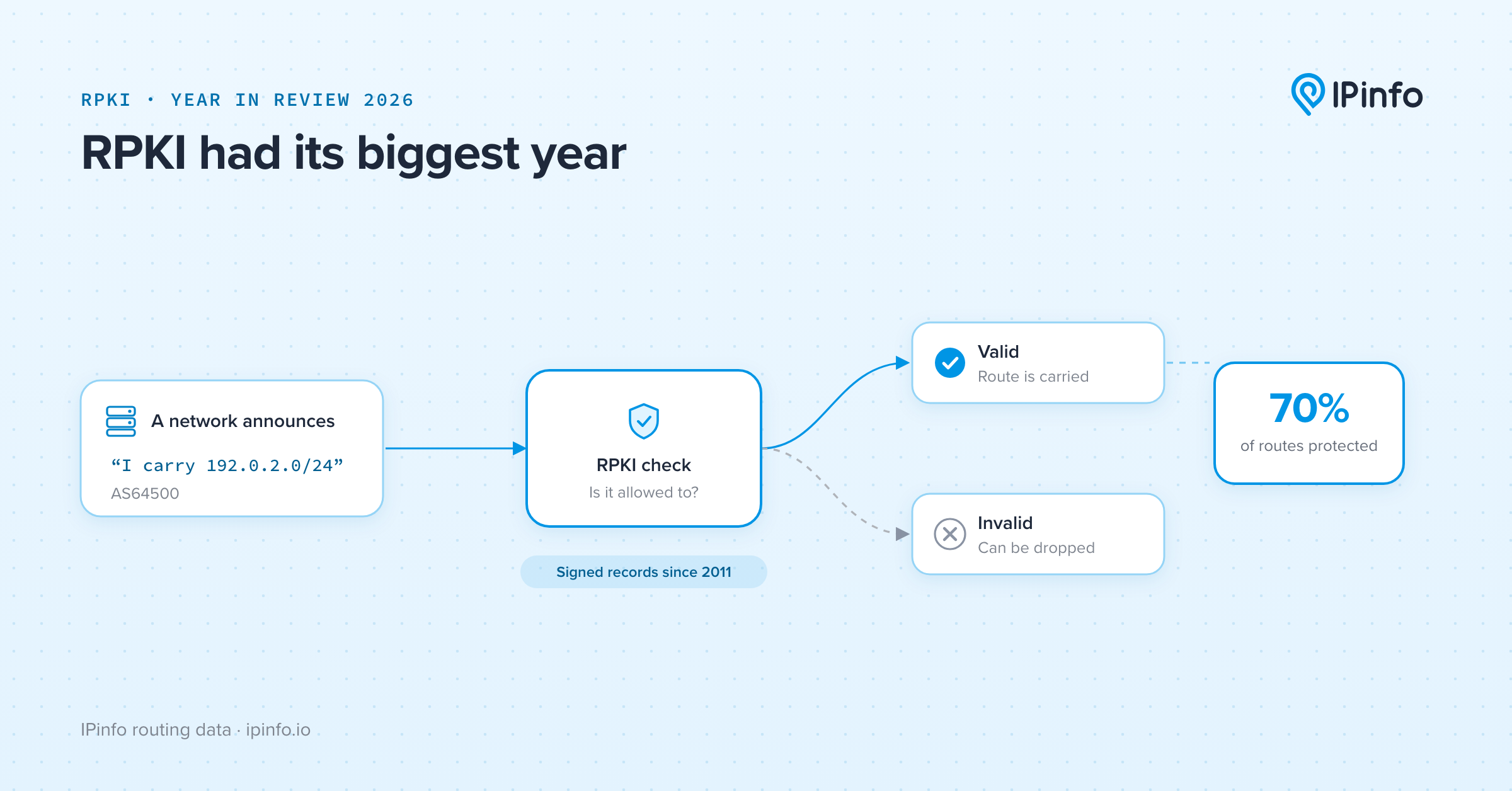
RPKI Protects 70.3% of Internet Routes After China Surge, Yet 18M Prefixes Remain Exposed
📷 Image Source: IPinfo

Executive Summary

  • •IPinfo reports that RPKI-valid internet routed prefixes climbed from 54.0% in September 2025 to 70.3% in September 2026.
  • •China increased its IPv4 addresses in RPKI-valid routes from 3.7% to 83.0% over the year, while nearly 60% of unprotected routed IPv4 space remains in the US.
  • •Because 16.2% of covered IPv4 routes and 20.9% of IPv6 routes use loose ROA permissions, roughly 18M more-specific prefixes remain exposed to forged-origin hijacks.

Community Sentiment

1-Tap Vote
NordVPN
AFFILIATE PARTNER30-Day Money-Back Policy • Encrypted Traffic

Encrypt your connection and network traffic with NordVPN

Get NordVPN
Affiliate disclosure: We may earn a commission if you subscribe through this link.

Key Developments & Data

The share of routed internet prefixes protected by valid Resource Public Key Infrastructure (RPKI) records rose from 54.0% in September 2025 to 70.3% in September 2026, a gain of 16.4 percentage points. China drove almost 60% of the global address gain, increasing its share of IPv4 addresses in RPKI-valid routes from 3.7% in September 2025 to 83.0% a year later, while nearly 60% of remaining unprotected routed IPv4 space sits in the United States. Typical RPKI-valid prefixes and unsigned prefixes reach 596 and 595 public collector routers respectively, whereas invalid announcements are dropped by enough networks that a typical invalid prefix reaches just 2 vantage points. Despite rising adoption, 138,698 of 855,217 RPKI-covered IPv4 routes (16.2%) and 20.9% of covered IPv6 routes have Route Origin Authorizations (ROAs) looser than the announced route, leaving roughly 18M more-specific prefixes vulnerable to forged-origin hijacks that still pass RPKI validation. Autonomous System Provider Authorization (ASPA) deployment grew 25-fold from 131 networks on September 28, 2025 to 3,272 networks on September 28, 2026, with published records actively verifying about 3.5% of observed internet routing beyond automatic short-path checks.

Zubiqo Strategic Assessment

Primary Impact

Global internet service providers, cloud hosting operators including Hetzner, DigitalOcean, and Contabo, telecom carriers, and enterprise network administrators managing Border Gateway Protocol (BGP) routing tables.

Strategic Shift

Internet routing security is transitioning from unverified trust to cryptographic origin validation via RPKI and early path verification via ASPA, though loose maxLength configurations continue to permit valid forged-origin sub-prefix hijacks.

The Ripple Effect

Unless network operators tighten maxLength settings in line with RFC 9319 and expand ASPA path validation, attackers can continue forging origin announcements across roughly 18M uncontested more-specific prefixes to intercept traffic and obtain legitimate TLS certificates.

This intelligence assessment is generated by Zubiqo's AI for informational purposes only.

Intelligence Quality Rating

Grade this brief: Slide & release to submit rating, or tap a preset.

🔥High Impact75/100
Slide & release to voteImmune to accidental scroll
Zubiqo Briefing

The daily signal, delivered every weekday.

A concise weekday briefing on AI, technology and business. Zero PR fluff.

Subscribe directly on Substack↗

Subscription completes on Substack • Free • 1-click unsubscribe anytime

✓ Free on Substack•✓ Official Substack enrollment•✓ 1-click unsubscribe
#rpki#bgp#cybersecurity#routing#ipinfo
Read original on IPinfo
Zubiqo MethodologyAI Synthesis

Synthesized from linked market reporting using AI extraction under Zubiqo's editorial standards. Have a correction? Contact our desk.

Event Magnitude6 / 10
Share

Read Next

G7 Finance Leaders Agree to Hold Tabletop Exercises Against AI Cyberattacks
Cybersecurity

G7 Finance Leaders Agree to Hold Tabletop Exercises Against AI Cyberattacks

BK Japan Discloses Data Breach Affecting 11.18 Million Burger King App Accounts
Cybersecurity

BK Japan Discloses Data Breach Affecting 11.18 Million Burger King App Accounts

Stay on the wire

Breaking tech, AI, and market intelligence the moment it happens. Zero fluff.

Live Broadcasts
TelegramXThreadsBlueskyMastodon
Opsin Raises $21M to Monitor Corporate AI Agents and Prevent Internal Data Leaks
Cybersecurity

Opsin Raises $21M to Monitor Corporate AI Agents and Prevent Internal Data Leaks

SOURCENEXT Discloses Data Breach Exposing 22.5 Million User Records
Cybersecurity

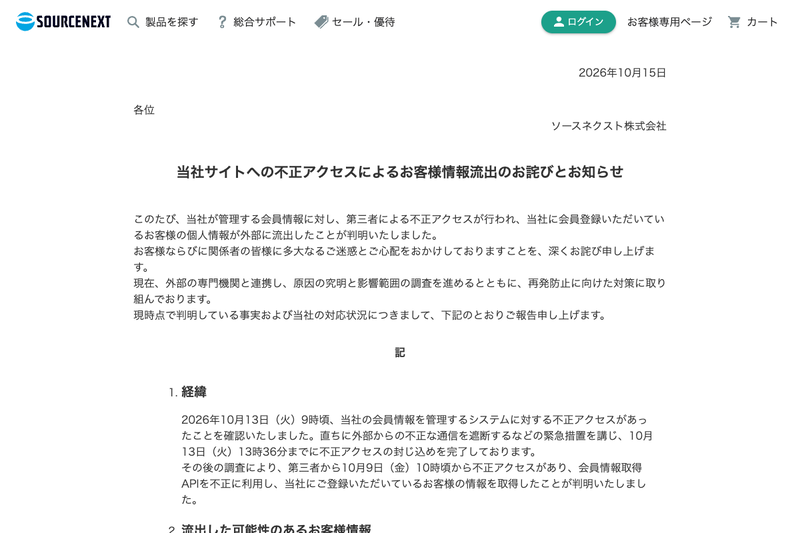
SOURCENEXT Discloses Data Breach Exposing 22.5 Million User Records

Zubiqo Methodology

AI Synthesis

Synthesized from linked market reporting using AI extraction under Zubiqo's editorial standards. Have a correction? Contact our desk.

Event Magnitude6 / 10

Related Briefs

Cybersecurity

G7 Finance Leaders Agree to Hold Tabletop Exercises Against AI Cyberattacks

Oct 16
Cybersecurity

BK Japan Discloses Data Breach Affecting 11.18 Million Burger King App Accounts

Oct 16
Cybersecurity

Opsin Raises $21M to Monitor Corporate AI Agents and Prevent Internal Data Leaks

Oct 16
Cybersecurity

SOURCENEXT Discloses Data Breach Exposing 22.5 Million User Records

Oct 16
Regulation

White House AI Task Force Adopts Charter, Triggers 120-Day Countdown for Frontier Lab Rules

Oct 16
Cybersecurity

Google Warns of Potential Mass Exploitation of BeyondTrust Remote Support Flaw by China-Linked Hackers

Oct 16